Why the Restaurant Industry's Value Reckoning Is a Card-Linked Offer Story
Two earnings weeks, one signal
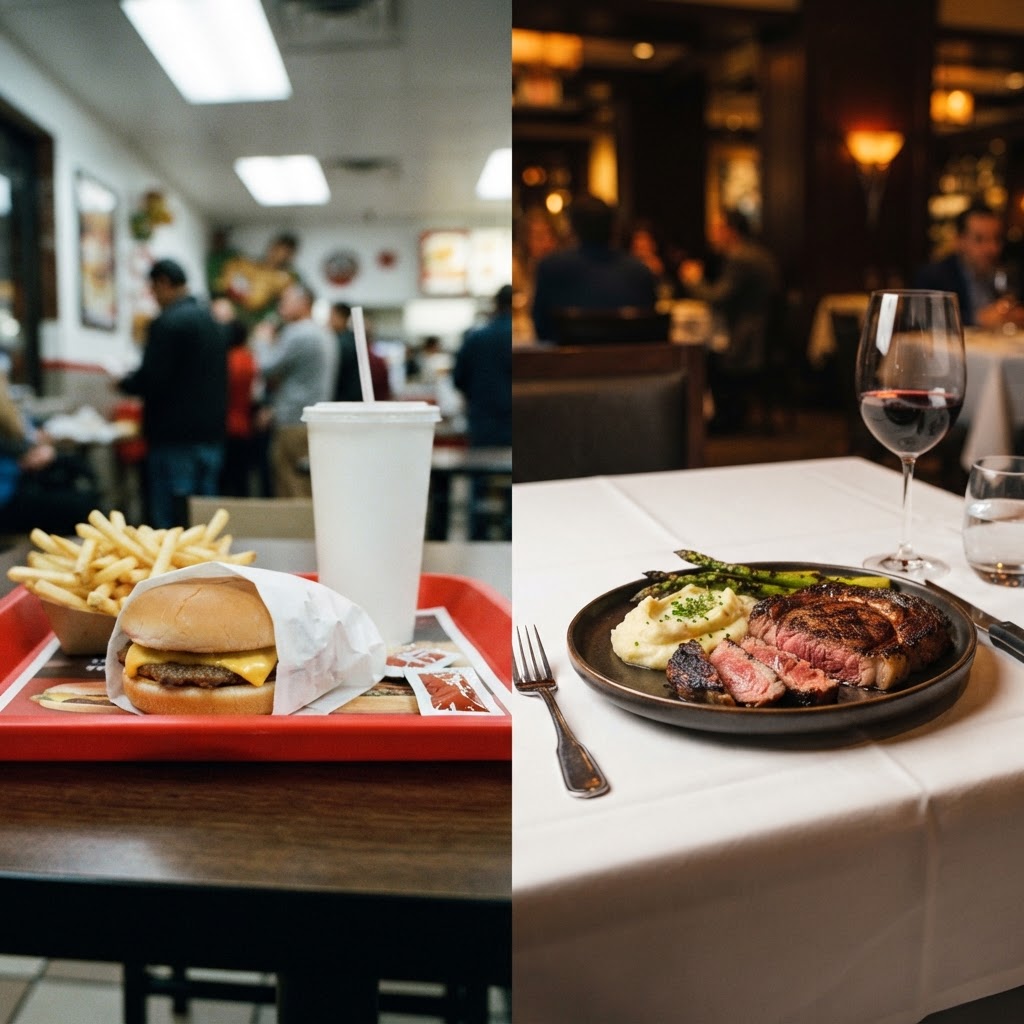
This week, McDonald's stock slid into its worst month since the pandemic shutdown — down roughly 30% from its highs — after CFO Ian Borden told investors that U.S. comparable sales were "slightly negative" through July and August, with a slight September rebound not enough to keep the full quarter out of the red. A week earlier, Darden Restaurants reported the opposite problem inside one company: fiscal Q1 revenue up 5.1% to $3.2 billion and comps up 3.2% company-wide, but LongHorn Steakhouse comps rose 6.8% — more than double Darden's overall rate and seven times Olive Garden's 1%.
Same industry, same month, two very different report cards. But underneath both is the same consumer behavior: people aren't cutting restaurants out of their lives — they're just choosing more carefully about where the value actually is. KPMG's summer 2026 Consumer Pulse survey found 67% of Americans are cooking at home more often, and 76% of those say it's about budget — not about giving up on eating out altogether. A quarter of respondents said they've shifted spending toward quick-service instead.
What's changed is the bar. Every restaurant visit now has to clear a "is this worth it?" test that didn't used to be there, and this week's two headlines are a live experiment in the different ways brands are trying to clear it.
The $3 lesson
McDonald's has spent the past year leaning into value the obvious way: ten menu items under $3, $5 meal bundles, and now a $2 breakfast sandwich with free medium fries on a $1 minimum purchase. It hasn't worked the way the company hoped. CEO Chris Kempczinski has told investors he expects flat industry traffic and inflation that "sticks around" for years, and the company's own numbers show why discounting alone isn't fixing the traffic problem: roughly two-thirds of the second quarter's traffic shortfall came from lost visits by loyal, existing customers — not new customers failing to show up. U.S. President Skye Anderson put it plainly: "we are falling short when it comes to consistent execution."
The uncomfortable arithmetic behind a blanket value menu is this: when the discount applies to every transaction, it applies just as much to the customer who was walking in anyway as it does to the one you're trying to win back. That's not incremental revenue — it's margin handed back on demand that already existed. Wall Street has started asking the same question about McDonald's broader turnaround plan: an $8.5 billion franchisee-support program and a push to refranchise 98% of U.S. restaurants can lift reported margins without necessarily putting more people in seats. Financial engineering and a traffic fix are not the same project, and investors are pricing in the difference.
LongHorn's answer: precision, not a wider discount
LongHorn isn't winning by being the cheapest steak in town — steak is one of the easiest proteins to replicate at home, and LongHorn isn't pricing against the grocery store. It's winning because guests who were on the fence about a full-service dinner decided the visit was worth it: better perceived quality, bigger portions, a service experience that reads as genuinely different from cooking at home. Olive Garden, sitting in the same portfolio with the same balance sheet and the same cost pressure, grew comps by only 1%.
That gap is the whole KPMG finding in miniature. Consumers aren't rejecting restaurants; they're rejecting restaurants that don't feel differentiated enough to justify the check. The brands pulling ahead this year aren't the ones cutting the widest swath of prices — they're the ones making a specific, credible case for value to the guest who's deciding whether tonight is a cook-at-home night or a go-out night.
What targeted, verified value looks like in practice
This is precisely the problem card-linked offers are built to solve, and it's the opposite mechanism from a menu-wide price cut. A CLO doesn't touch the list price for anyone. It puts a real, bank-verified rebate in front of a specific guest — someone who hasn't visited in months, or someone who's never been a customer at all — at the exact moment they're deciding whether a restaurant dinner is worth the money. And because the offer is settled against actual transaction data, it only pays out when a real, incremental purchase happens. There's no version of a card-linked campaign that quietly discounts a loyal regular's order the way a blanket value menu does — the whole model is built around proving the dollar spent produced demand that wouldn't otherwise have existed.
The results back it up. A national lodging brand ran a holdout-tested card-linked campaign aimed at new and lapsed guests and saw a 131% incremental revenue lift. A national coffee chain generated a 4.9x net incremental ROI, with the majority of that lift coming from new and lapsed customers rather than guests who would have shown up regardless. A top-five burger chain saw a 123% incremental revenue lift and an $8.30 net incremental ROAS. None of that is a coupon blasted at everyone with a loyalty app open — it's a rebate aimed at the specific guest who needed a reason to come back, verified against the transaction that proves it worked.
The takeaway
The restaurant industry's "value reckoning" isn't really a pricing problem. It's a targeting and attribution problem. The chains pulling ahead this year are proving worth to the right guest at the right moment, not discounting the widest possible audience and hoping traffic follows. That distinction is exactly what card-linked offers are built for: real value delivered at the point of decision, paid for only when it produces a transaction that wouldn't have happened otherwise.
LuckyDiem runs the largest card-linked offer platform in the U.S. — 500M+ linked cards across major banks and card networks, and 200+ merchant partners — built around that same principle: pay for proven incremental demand, not for demand you already had.
For more information, contact info@luckydiem.com
Interested in learning more?
Get in touch to explore how LuckyDiem can work for your brand.
Contact Us